최근 글로벌 호스피탈리티 전문 매체인 Hospitality Net은 주목할 만한 분석을 통해 하나의 변화를 짚었습니다. 호스피탈리티 산업은 이제 AI 도입을 검토하는 단계를 지나, AI가 모든 서비스의 전제 조건이 되는 구조로 이동하고 있다는 점입니다.
핵심은 분명합니다. AI는 단순히 운영 효율을 높이는 보조 도구를 넘어, 고객 접점과 선택 구조 자체를 재편하는 기술이 되고 있습니다. 이 변화는 단기적인 트렌드라기보다, 호텔이 고객에게 발견되고 선택되는 방식이 근본적으로 달라지는 구조적 전환에 가깝습니다.
1. 기존 검색 구조의 붕괴: “읽히지 않으면 존재하지 않는 것이다”
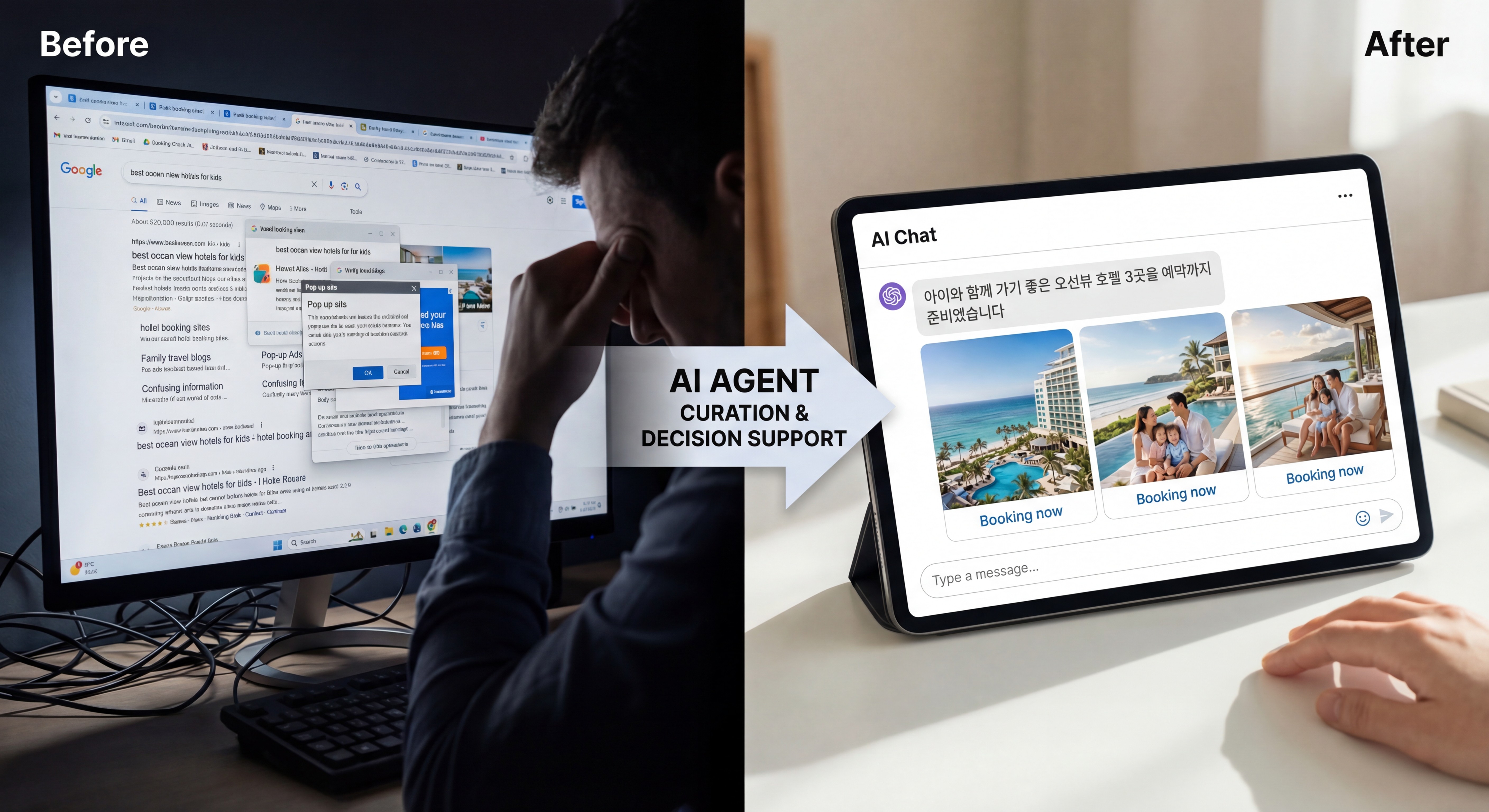
여행객의 정보 탐색 방식은 빠르게 달라지고 있습니다. 과거에는 검색 결과 페이지에서 여러 링크를 비교했다면, 이제는 AI 기반 서비스에 질문을 던지고 요약된 추천을 받는 방식이 늘어나고 있습니다. “이번 주말에 아이와 함께 가기 좋은 호텔 추천해줘.” 이 과정에서 AI는 다음과 같은 요소를 종합적으로 판단합니다.
구조화된 객실/요금 데이터
실시간 예약 가능 여부
리뷰 맥락
위치 및 부대시설 정보
여기서 중요한 점은, AI가 이해하고 처리할 수 있는 데이터 구조를 갖추지 못한 호텔은 추천 과정에서 자연스럽게 배제될 가능성이 높다는 것입니다. 이는 단순한 검색 순위 경쟁과는 다른 문제입니다. 앞으로는 ‘AI가 읽을 수 있는 호텔인가’가 가시성을 결정하는 요소가 될 수 있습니다.
2. Voice AI는 단순 서비스 향상이 아니라 ‘수익 방어 장치(Revenue Insurance)’
호텔 운영에서 전화 응대는 여전히 중요한 예약 채널입니다. 그러나 많은 호텔이 여전히 피크 시간대에 전화를 다 받지 못합니다. 시간대에 따라 미응답률은 20~30%까지 올라갑니다. 놓쳐버린 전화 한 통은 단순한 응대 실패가 아닙니다.
직접 예약 매출의 즉각적 손실
OTA로 전환되며 15~25% 수수료 발생
재방문 가능성이 높은 고객의 이탈
이 지점에서 Voice AI의 역할은 분명합니다.
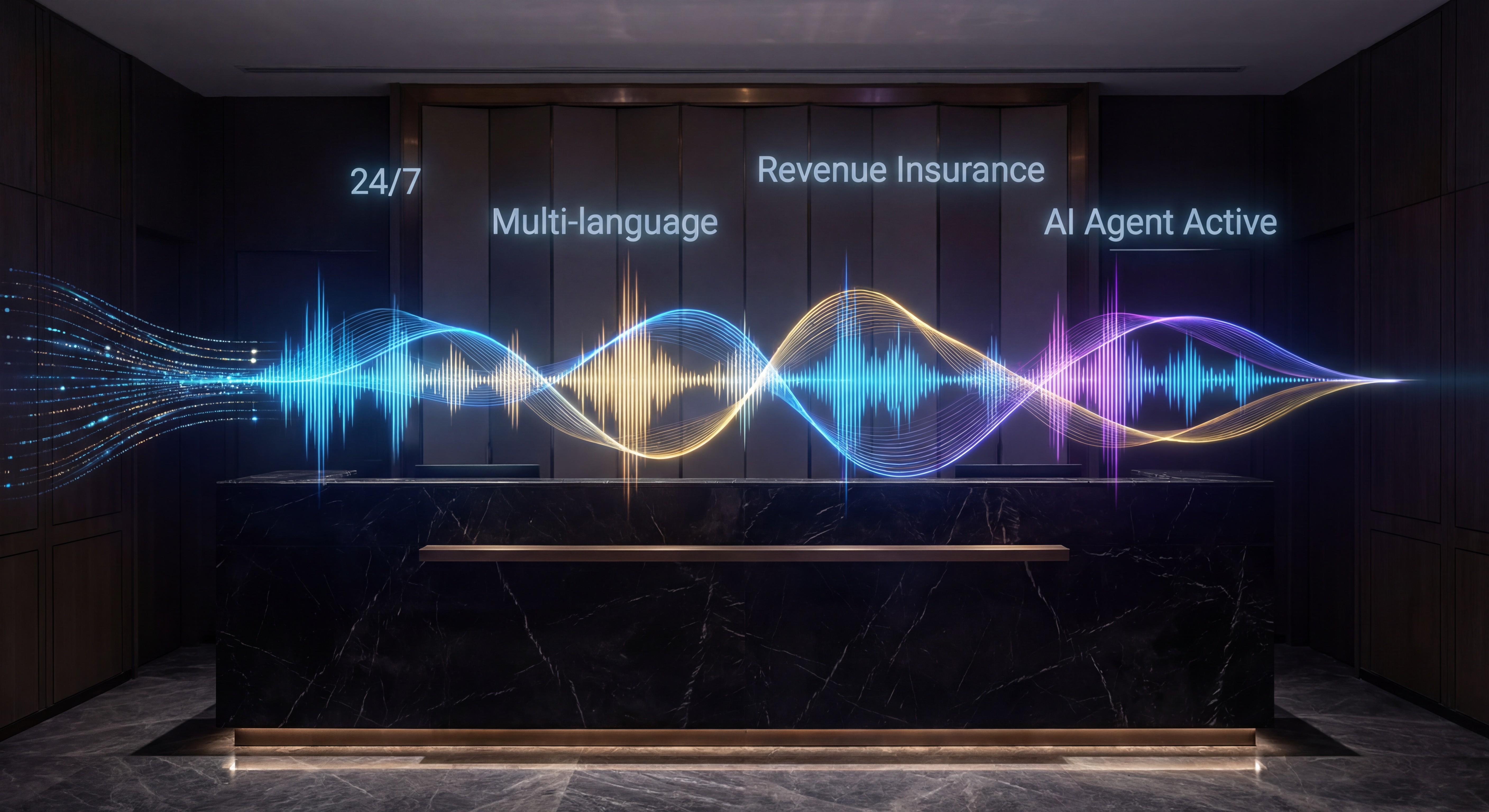
24시간 다국어 대응
대기 시간 최소화
예약/변경/문의까지 업무 완결
이는 상담원을 보조하는 기술이 아닙니다. 직접 예약 채널을 안정적으로 유지하여 새어나가는 마진을 실시간으로 막는 수익 방어 장치입니다.
3. 가장 어려운 문제는 기술이 아니라 ‘AI 문해력(AI Literacy)’
AI 도입 실패의 원인은 종종 모델 성능이 아니라 조직에 있습니다. 모델은 이미 충분히 강력하고, 도구 역시 준비되어 있습니다. 문제는 조직이 AI-First 구조로 사고하지 못하는 데 있습니다. AI 도입은 단순한 툴 설치가 아닙니다. 프롬프트 설계, 평가 체계, 리스크 관리, 워크플로우 재구성, 시스템 간 연결 설계가 함께 이루어져야 합니다.
이를 사후 보완이 아닌 전략의 일부로 설계한 조직만이 성과를 만듭니다. AI는 사람을 대체하기보다 역할을 재정의합니다. 교육이 부족하면 직원들은 기존 방식으로 되돌아가고, 자동화는 형식에 그칠 가능성이 높습니다. 반대로 전환이 충분히 설계된 조직에서는 다음과 같이 전환됩니다.
단순 실행 중심 역할 → 판단과 검증 중심 역할
응대 중심 업무 → 전략적 고객 경험 설계
반복 작업 수행 → 브랜드 품질 관리
그 결과, 서비스 수준과 운영 효율은 동시에 개선됩니다.
4. 정리하며: 업무의 지원을 넘어, 완결의 구조로
호스피탈리티 산업에서 AI는 점점 보편적 인프라에 가까워지고 있습니다. 앞으로의 경쟁력은 “AI를 도입했는가”가 아니라, “AI가 실제로 운영을 완결적으로 수행하도록 설계되어 있는가”에 달려 있을 가능성이 높습니다.
브이몬스터는 이러한 흐름 속에서 단순 응대 자동화를 넘어, 예약 시스템과 연동되어 실제 업무를 처리하는 자율형 AI 컨시어지를 설계하고 있습니다. AI 중심 구조로의 이동은 서서히, 그러나 분명하게 진행되고 있습니다. 이 변화를 전략적으로 준비하는 브랜드와 그렇지 않은 브랜드의 격차는 점점 벌어질 것입니다.
본 포스팅은 글로벌 호스피탈리티 매체 Hospitality Net의 기고문 “AI in Hospitality: The 2025 Reality and the 2026 Horizon”의 인사이트를 바탕으로 브이몬스터의 관점을 더해 작성되었습니다.
In a recent, noteworthy analysis, the global hospitality publication Hospitality Net pointed to a single shift: the hospitality industry has moved past the stage of merely considering AI adoption and is now heading toward a structure in which AI becomes the precondition for every service.
The core point is clear. AI is becoming more than an auxiliary tool that improves operational efficiency—it is becoming a technology that reorganizes the customer touchpoint and the very structure of choice. This shift is less a short-term trend than a structural transition in which the way hotels are discovered and chosen by customers is fundamentally changing.
1. The Collapse of the Old Search Structure: “If You Aren’t Read, You Don’t Exist”
The way travelers search for information is changing fast. Where they once compared multiple links on a search results page, they increasingly pose a question to an AI-based service and receive a summarized recommendation. “Recommend a hotel that’s good to visit with a child this weekend.” In this process, AI makes a comprehensive judgment based on factors such as:
Structured room/rate data
Real-time availability
Review context
Location and amenity information
The crucial point here is that a hotel without a data structure that AI can understand and process is highly likely to be naturally excluded from the recommendation process. This is a different problem from a simple search-ranking race. Going forward, “is this a hotel that AI can read?” may become the factor that determines visibility.
2. Voice AI Is Not Just a Service Upgrade—It’s ‘Revenue Insurance’
In hotel operations, phone handling remains an important booking channel. Yet many hotels still fail to answer every call during peak hours. Depending on the time of day, the no-answer rate can climb to 20–30%. A single missed call is not merely a failure to respond.
An immediate loss of direct booking revenue
A shift to OTAs, incurring 15–25% commissions
The departure of customers who are highly likely to return
At this point, the role of Voice AI is clear.
24-hour multilingual support
Minimized wait times
Completing the job—from booking to changes to inquiries
This is not a technology that assists agents. It is revenue insurance that keeps the direct booking channel stable and stops leaking margin in real time.
3. The Hardest Problem Isn’t Technology—It’s ‘AI Literacy’
The cause of failed AI adoption often lies not in model performance but in the organization. The models are already powerful enough, and the tools are ready too. The problem is that organizations fail to think in an AI-First structure. Adopting AI is not simply installing a tool. Prompt design, evaluation frameworks, risk management, workflow redesign, and inter-system integration design must all come together.
Only organizations that design these as part of their strategy—rather than as an afterthought—produce results. AI redefines roles rather than replacing people. When training is insufficient, employees revert to old ways, and automation is likely to remain a formality. Conversely, in organizations where the transition is sufficiently designed, the shift unfolds as follows:
From execution-centric roles → to judgment- and verification-centric roles
From response-centric work → to strategic customer experience design
From performing repetitive tasks → to brand quality management
As a result, service quality and operational efficiency improve at the same time.
4. In Closing: Beyond Supporting Work, Toward a Structure of Completion
In the hospitality industry, AI is increasingly becoming near-universal infrastructure. Future competitiveness is likely to depend not on “have you adopted AI?” but on “is your AI designed to actually carry out operations to completion?”
Within this current, VMONSTER is designing an autonomous AI concierge that goes beyond simple response automation—one that integrates with reservation systems to handle real work. The move toward an AI-centric structure is proceeding slowly but surely. The gap between brands that prepare for this change strategically and those that don’t will only continue to widen.
This post was written by adding VMONSTER’s perspective to insights from the global hospitality publication Hospitality Net’s contributed article, “AI in Hospitality: The 2025 Reality and the 2026 Horizon.”